FDR

A New Political Life

(paid link)

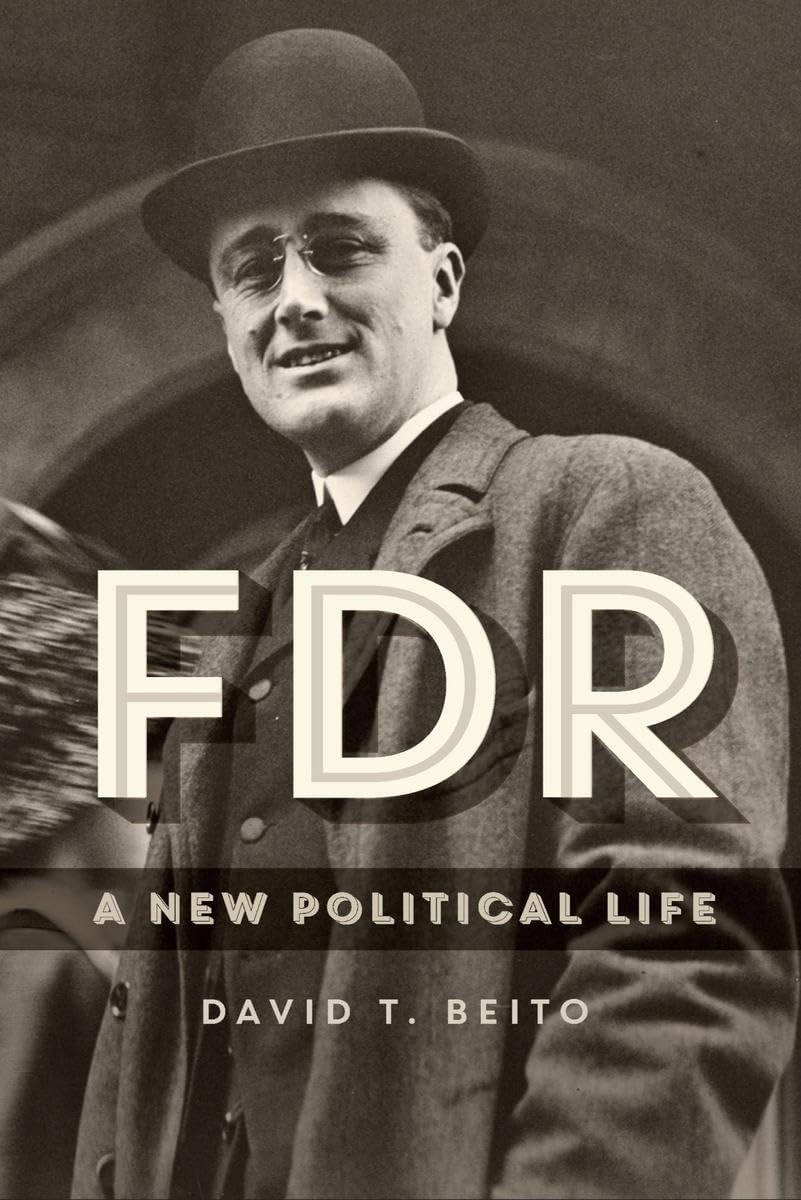
I read a previous book by the author, David T. Beito, The New Deal’s War on the Bill of Rights a couple years back; it detailed FDR's (and his Democrat co-conspirators) lousy record on civil liberties, concentrating on Japanese internment during WW2; warrantless snooping on political opponents; trumped-up "investigations" of critical newspaper and radio outlets. I enjoyed it … if "enjoyed" is the right word.

This book covers a lot of the same ground, but covers more of FDR's pre-presidential behavior, and also to his problematic behavior outside the civil liberty arena. As I said about the previous book: it's not a "warts and all" book: it's mostly just the warts. Beito's only unreserved praise is Roosevelt's brave handling of his polio affliction.

Beito finds that FDR's handling of the Depression was poor; although his policies were politically popular, they were ineffective in restoring the private economy. (And, as Milton Friedman taught us, the Federal Reserve also had a knack of making just the wrong monetary moves at the wrong time.) He was inexcusably indifferent to the ongoing abuse of Black America, not wanting to damage his political prospects in with white Southerners. He continued damaging protectionist policies, which probably caused ongoing economic misery in Europe, encouraging the rise of you-know-who. He thought he was good buddies with Stalin during the war, and encouraged see-no-evil policies toward the Soviet Union. Beito criticizes FDR's insistence on "unconditional surrender" of Germany and Japan, which (arguably) prolonged the war and caused additional American deaths, in addition to enemy soldiers and civilians.

And he was indifferent to the plight of European Jewry, passing up numerous opportunities to decrease their death toll.

So: a welcome addition to FDR bios, countering a lot of the usual hagiography.
The Stars Turned Inside Out

(paid link)

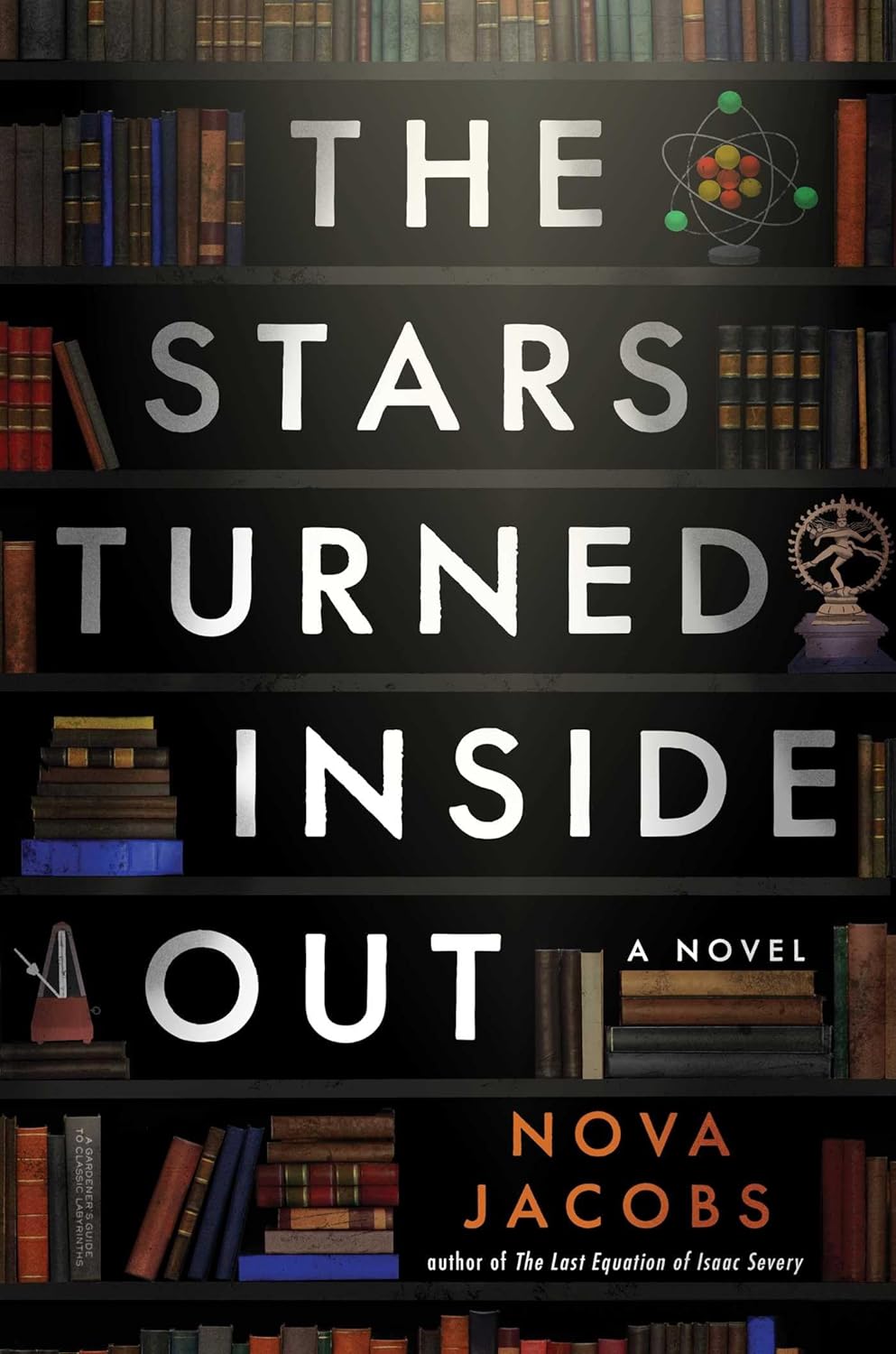
This book was on the WSJ list of Best Mysteries of 2024. (WSJ gifted link). The author, Nova Jacobs, previously wrote The Last Equation of Isaac Severy, which I dismissed as "not my cup of tea" last year. Good news: I liked this one a lot better!

It is set mostly at CERN, site of much high-energy physics research. Most notable is its Large Hadron Collider (LHC), most famous for proving the existence of the long-theorized Higgs Boson back in 2012.

Ms. Jacobs adds some fictional interest, starting with a different kind of LHC discovery: the tunnel contains the corpse of physicist Howard Anderby, who seems to have been fatally irradiated in the LHC tunnel. Except nobody can figure out how he got in there, bypassing security. And nobody can figure out why the LHC got turned on at that time. It's sort of a double locked-room mystery.

CERN is located on the France-Switzerland border, in a kind of law enforcement limbo. To minimize bad publicity, CERN research group director Chloé Grimaud and Yvonne Faye, head of CERN, ask their erstwhile companion, private investigator Sabine Leroux, to see if she can track down the facts behind Howard's death.

Complicating things: the apparent cybertheft of CERN data by the competing supercollider group in China. And also another corpse found drowned in CERN's (fictional) water tank housing a liquid xenon dark matter detection experiment.

The book alternates its timeline between events that happened before Howard's death and Sabine's investigation. The "before" timeline follows postdoc Eve, who becomes infatuated with Howard, and eventually discovers things about him that are … well … kind of Out There. By the time that's revealed, I was having too much fun to mind.


Last Modified 2026-06-19 6:36 AM EDT

The Mandalorian and Grogu

[4.5 stars] [IMDB Link] [The Mandalorian and Grogu]

I guess this movie is suffering at the box office (ScreenRant: "The Mandalorian And Grogu Box Office Suffers With Star Wars' Worst-Ever Week 2 Drop"). Some of the reviews have been mediocre. Well, let me tell you: my mileage varied. Pun Son and I attended a Saturday evening show, and I found my face hurting from smiling so much.

It probably helped that I watched the streaming series, and got accustomed to the Mandalorian's reluctant heroism, and even more reluctant surrogate parenthood of Baby Yoda.

And maybe also helping is the presence of Sigourney Weaver, whom I've kind of adored since watching her in Alien 47 years ago. (She looks great!)

Here, the movie opens up with a slam-bang action sequence, as Mando is on the trail of a leftover thug from the not-quite-defunct Empire. After much violence (it appears that Mando has taken lessons from John Wick) he returns to meet with Ward (Sigourney) for his next assignment. Which turns out to be even more dangerous. More explosions, betrayals, monsters (including Hutts!), escapes, scares, … It's a lot of fun.

The Sound of Hundreds of Mathematicians Slapping Their Foreheads

Saying "Gee, Why Didn't I Think Of That?"

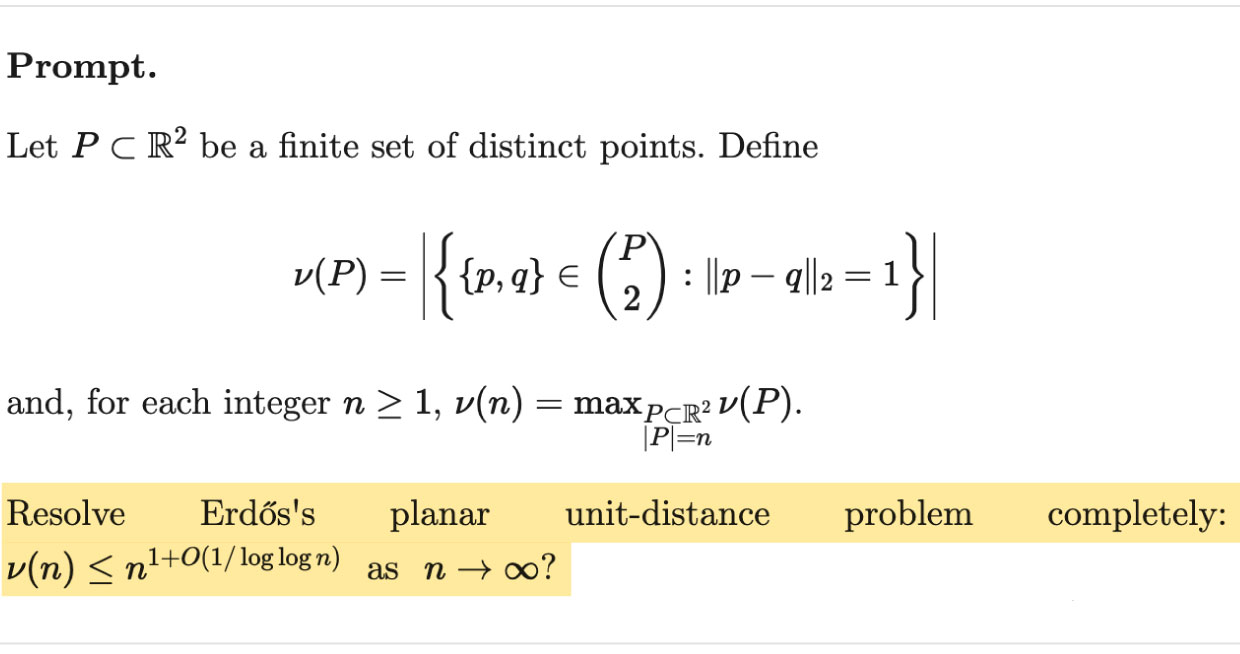
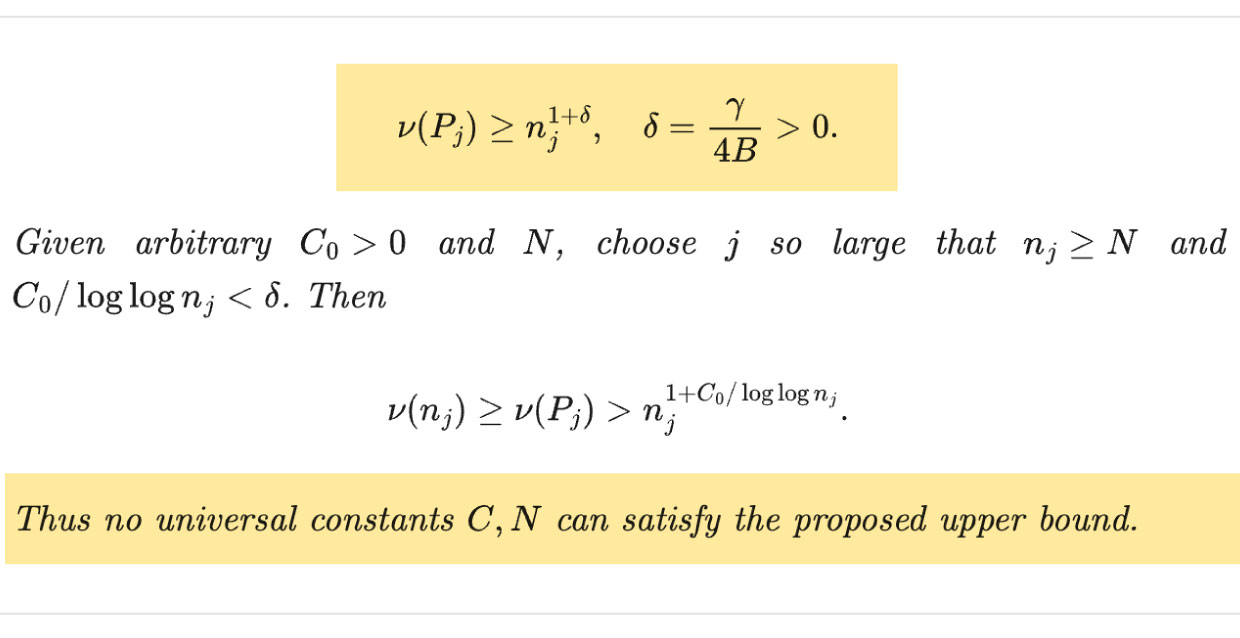
The WSJ brings the latest AI triumph: A Famous Math Problem Stumped Humans for 80 Years. AI Just Cracked It.. (WSJ gifted link) Specifically, when fed this

After thinking a bit, the response:

The article explains in slightly less geeky terms: famous math guy Paul Erdős proposed the "unit distance" problem 80 years ago, offering $500 for a solution. And:

The simplest version of the unit distance problem goes something like this: If you put n dots on a sheet of paper, how many pairs of dots can be exactly one unit apart?

Erdős showed in 1946 that arranging those dots in a grid produced a certain number of pairs, and his conjecture was that no arrangement could do much better. OpenAI’s model found one that does. In other words, the proof was a disproof.

Why could AI (specifically: OpenAI) solve this when even human brains failed? The article offers three reasons:

  • "… this particular solution happens to be highly counterintuitive."
  • "… humans specialize while AI synthesizes."
  • "… AI has time, attention, patience, focus and the persistence to stick with methods that humans might abandon."

Draw your own conclusions and implications. I got nothin'.

Also of note:

  • Please release me, let me go. The Boston Globe reports: Libertarians cut the N.H. party loose. Now what?

    The Libertarian Party of New Hampshire, which has frequently wielded combative rhetoric to inflame political tensions in recent years, is officially on the outs with the national party’s leadership team.

    The newly elected Libertarian National Committee voted 15-2 this week to sever ties with LPNH, citing the New Hampshire affiliate’s “numerous anti-libertarian positions” and its 2024 endorsement of Republican presidential nominee Donald Trump.

    The National LP had a tweet containing:

    Statement on the Disaffiliation of LPNH

    “The resolution to disaffiliate the Libertarian party of New Hampshire was the unfortunate culmination of years of behavior in violation of the Libertarian Party’s platform,” said new LNC Chair Evan McMahon. “These violations reached an impasse, and the previous Libertarian National Committee was unable to reach an armistice with the LPNH. One of my top priorities coming into office was to make it clear that the LNC will adhere to the platform and determine who we will associate with based on those grounds.”

    And:

    Language from the Motion to Disaffiliate LPNH

    The bylaws are clear that affiliate Parties shall not endorse the candidate of another Party. Despite this, the Libertarian Party of New Hampshire openly and publicly endorsed President Trump during the election in 2024.

    Furthermore, they have crudely and repeatedly undermined our own candidates and have espoused numerous anti-libertarian positions on a National level.

    Be it Resolved that because of these reasons and more, the Libertarian National Committee moves to disaffiliate the Libertarian Party of New Hampshire, mandating that they cease and desist the use of the Party name and logo, until such a time as the LNC recognizes a new affiliate in New Hampshire that shares our Party’s foundational values.

    So there.

    For the record: both the national party and the LPNH seem to be going out of their way to lose my vote in recent years. This didn't help.

  • I'll take 125 $2 bills instead. Collin Levy writes in the WSJ's "Free Expression" newsletter: It’s All About the Donalds.

    The Trump administration says it wants the president’s face on a $250 bill, and the big question is: What took so long?

    What else to say about the ridiculous news that administration officials are pushing the Bureau of Engraving and Printing to mock up a new banknote featuring a portrait of Donald Trump. His signature has already been added alongside the Treasury secretary’s on U.S. bills, and the U.S. Mint has approved a limited-production commemorative 24-karat gold coin with his likeness.

    Don’t forget the Trump Accounts for our wee ones, the TrumpRx prescription drug portal and the Trump Gold Card visas for immigrants who want to buy their way in with a “contribution” to the government. No one in Washington can go for a jog without seeing Mr. Trump’s mug hanging on the Mall or outside the Justice Department. And whatever happened to “Trump Gaza”?

    This sort of leader-worship is common among autocrats. In Cuba, Vietnam and China, images of Fidel Castro, Ho Chi Minh and Mao Zedong have long been present in government buildings, schools and private businesses. (Not to mention T-shirts and key chains for despot tourist kitsch.) In North Korea, citizens are expected to hang pictures of Kim Jong Un in their homes.

    I've heard that Canada has images of a loon on their dollar coins. Why do we have to have a loon on a $250 bill?